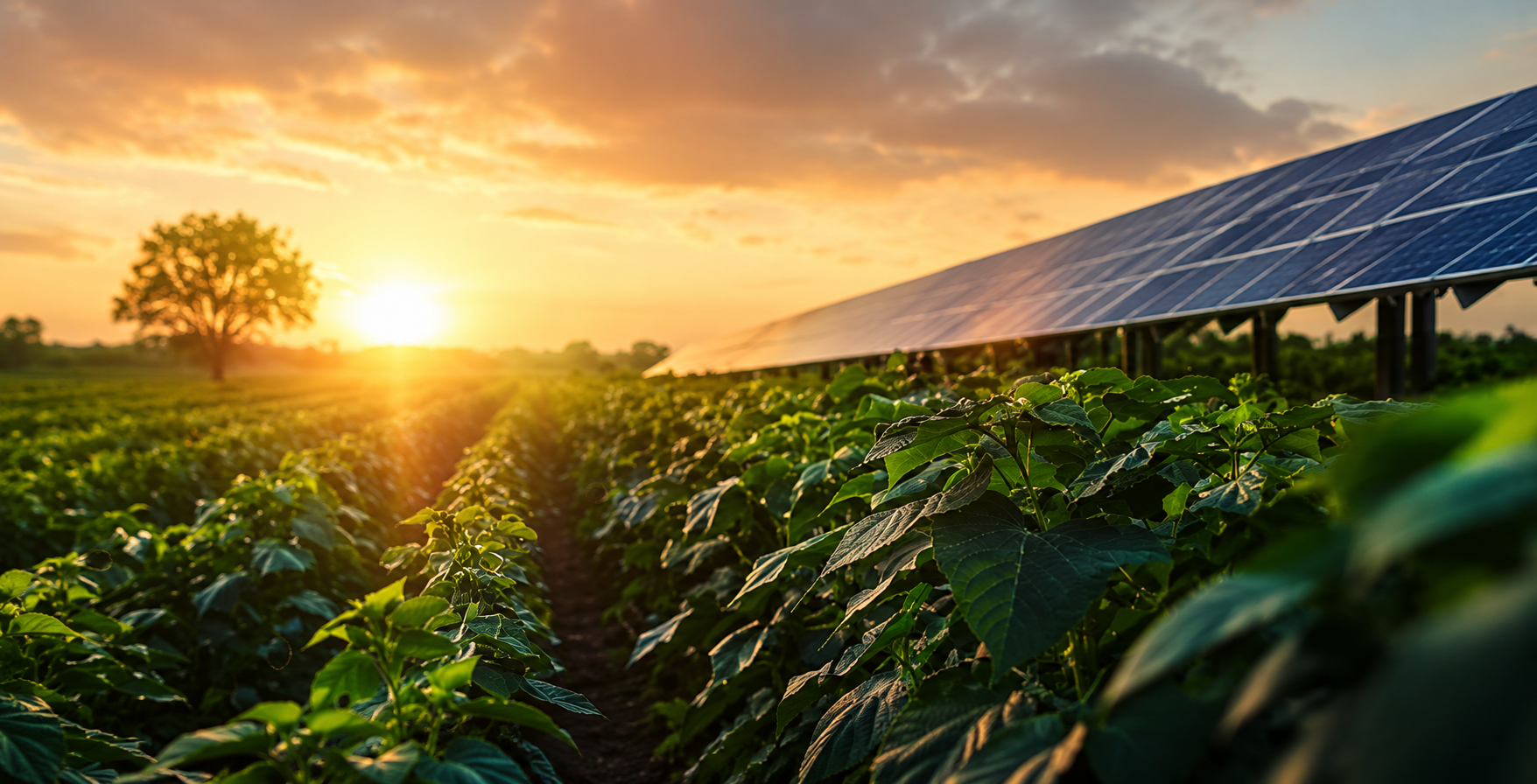
In recent years, distributed energy generation has been developing rapidly in Ukraine. Homeowners, businesses, agricultural enterprises and commercial facilities are increasingly investing in solar PV systems not only to reduce electricity costs but also to improve their energy independence.
Alongside this market development, a new framework for managing surplus electricity has emerged — the Active Consumer model and the Self-Generation Mechanism. However, many misconceptions still exist around this topic. Active Consumers are often described as a replacement for the Feed-in Tariff, although these are fundamentally different approaches.
This article explains how the Active Consumer model works, its key benefits for solar PV owners, and the factors that should be considered before implementing such a solution.
Who Is an Active Consumer?
The concept of an Active Consumer was introduced in Ukraine through Law No. 3220-IX adopted on June 30, 2023.
An Active Consumer is an electricity consumer who simultaneously:
- consumes electricity for their own needs;
- owns a power generation facility, such as a solar PV system;
- may store electricity using energy storage systems;
- is allowed to transfer or sell surplus electricity to the grid.
The key principle of this model is that the generating facility is designed primarily to cover on-site electricity demand rather than to generate income through electricity sales.
Regulatory Framework
The operation of Active Consumers in Ukraine is currently governed by several key regulatory documents:
- Law of Ukraine No. 3220-IX dated June 30, 2023;
- The Law of Ukraine “On the Electricity Market”;
- NEURC Resolution No. 2651 dated December 29, 2023;
- Retail Electricity Market Rules;
- Additional regulatory acts governing electricity metering and settlements.
NEURC Resolution No. 2651 establishes the procedures for electricity accounting, settlements, and surplus energy transactions performed by Active Consumers.
How Does an Active Consumer Differ from the Feed-in Tariff?
This is one of the most common questions among solar PV owners.
Historically, the Feed-in Tariff was created to encourage renewable electricity generation by allowing producers to sell electricity at a fixed state-supported tariff.
The Active Consumer model follows a different philosophy.
Its primary objective is to maximize the use of self-generated electricity on-site.
While surplus electricity may be transferred to the grid, electricity sales are not the main purpose of the system.
In practice, the model shifts the focus from:
Generate → Sell
to:
Generate → Consume → Export Surplus
As a result, modern solar PV projects increasingly focus on matching generation with consumption patterns and integrating energy storage systems to increase self-consumption.
How Does the Self-Generation Mechanism Work?
The operating principle is relatively straightforward.
During daylight hours, a solar PV system generates electricity.
The generated energy is first used to supply the building’s current electrical loads.
If generation exceeds consumption, the surplus electricity may:
- charge an energy storage system;
- be exported to the electricity grid.
When solar generation is insufficient, for example during the evening or cloudy weather, electricity can be supplied either from the battery system or from the public grid.
It is important to understand that settlements between an Active Consumer and an electricity supplier are not based on a simple “kilowatt-hour for kilowatt-hour” exchange.
Instead, the Self-Generation Mechanism uses a value-based settlement approach that accounts for both exported and imported electricity.
Why Are Battery Systems Important?
Battery Energy Storage Systems (BESS) are not mandatory for obtaining Active Consumer status. However, in practice, they can significantly improve the efficiency and flexibility of a solar PV installation.
Battery systems allow users to:
- store excess solar generation during the day;
- use stored energy after sunset;
- provide backup power during grid outages;
- increase the share of self-consumed electricity.
For most solar PV owners, maximizing self-consumption is one of the key factors influencing the overall economic performance of the system.
Instead of exporting excess electricity to the grid, energy can be stored and used when it is needed most, reducing dependence on external electricity supplies.
What Limitations Should Be Considered?
When designing a solar PV system, it is important to take into account both regulatory requirements and the technical characteristics of the facility.
Different categories of consumers may be subject to different conditions and capacity limits.
In addition, the following factors should be carefully evaluated:
- contracted connection capacity;
- grid connection requirements;
- local network capabilities;
- electricity metering configuration;
- future expansion plans.
For this reason, a professional feasibility assessment should always be performed before selecting the size of a solar PV system.
Modern solar projects should be designed based on actual consumption patterns rather than solely on the available roof area or the number of solar modules.
Common Myths About Active Consumers
Myth 1. The Active Consumer model is simply a new Feed-in Tariff
No. These are two different approaches. The Active Consumer model is primarily focused on self-consumption, whereas the Feed-in Tariff was originally designed to support electricity sales from renewable energy sources.
Myth 2. Exporting more electricity always means greater financial benefits
Not necessarily.In most cases, the highest economic value is achieved when a larger portion of generated electricity is consumed on-site.
This is why many modern solar PV projects are designed to maximize self-consumption rather than energy exports.
Myth 3. Battery systems are only useful during power outages
No. While batteries provide backup power, they also play an important role in storing surplus solar energy and increasing self-consumption rates.
This can improve the overall efficiency of the entire energy system.
Myth 4. The Active Consumer model is only suitable for residential buildings
No. The Self-Generation Mechanism can be applied by both residential and non-residential consumers, subject to applicable regulatory requirements.
Businesses, farms, commercial facilities and industrial sites can also benefit from this model.
Today, the Self-Generation Mechanism may be particularly attractive for:
- homeowners;
- agricultural enterprises;
- manufacturing facilities;
- commercial buildings;
- logistics centers;
- office buildings;
- facilities equipped with energy storage systems.
The model is generally most effective for facilities with significant daytime electricity consumption, where a large share of solar generation can be used directly on-site.
The Self-Generation Mechanism represents an important step in the development of distributed energy generation in Ukraine.
For solar PV owners, it creates new opportunities not only to generate electricity for their own needs but also to manage consumption, storage and surplus energy more efficiently.
At the same time, the Active Consumer model should not be viewed as a mechanism for generating quick income through electricity sales.
Its primary value lies in increasing energy independence, maximizing self-consumption and reducing exposure to future electricity price fluctuations.
As a result, the successful implementation of a modern solar PV system increasingly depends on proper system sizing, detailed consumption analysis and the integration of advanced energy storage solutions.