When choosing a solar power system, most customers first focus on the solar panels. Their power ratings are usually the main selling point: 580 W, 620 W, TOPCon, bifacial, Tier 1, and more.
However, in real-world operation, the performance and stability of a solar power system depend not only on the panels, but also on the inverter. That is why the question “what matters more — solar panels or the inverter?” does not have a simple answer.
Let’s take a closer look at how the system works and where cutting costs can become a serious mistake.
How a Solar Power System Works
In simplified form, the system consists of:
| Component | Main Function |
|---|---|
| Solar Panels | Generate direct current (DC) |
| Inverter | Converts DC into alternating current (AC) |
| Batteries (ESS) | Store electrical energy |
| Monitoring System | Controls and manages system operation |
Solar panels generate electricity, but the inverter is responsible for managing the entire system:
- converts electricity;
- controls power generation;
- interacts with the grid;
- provides system protection;
- manages batteries;
- enables backup and autonomous operation.
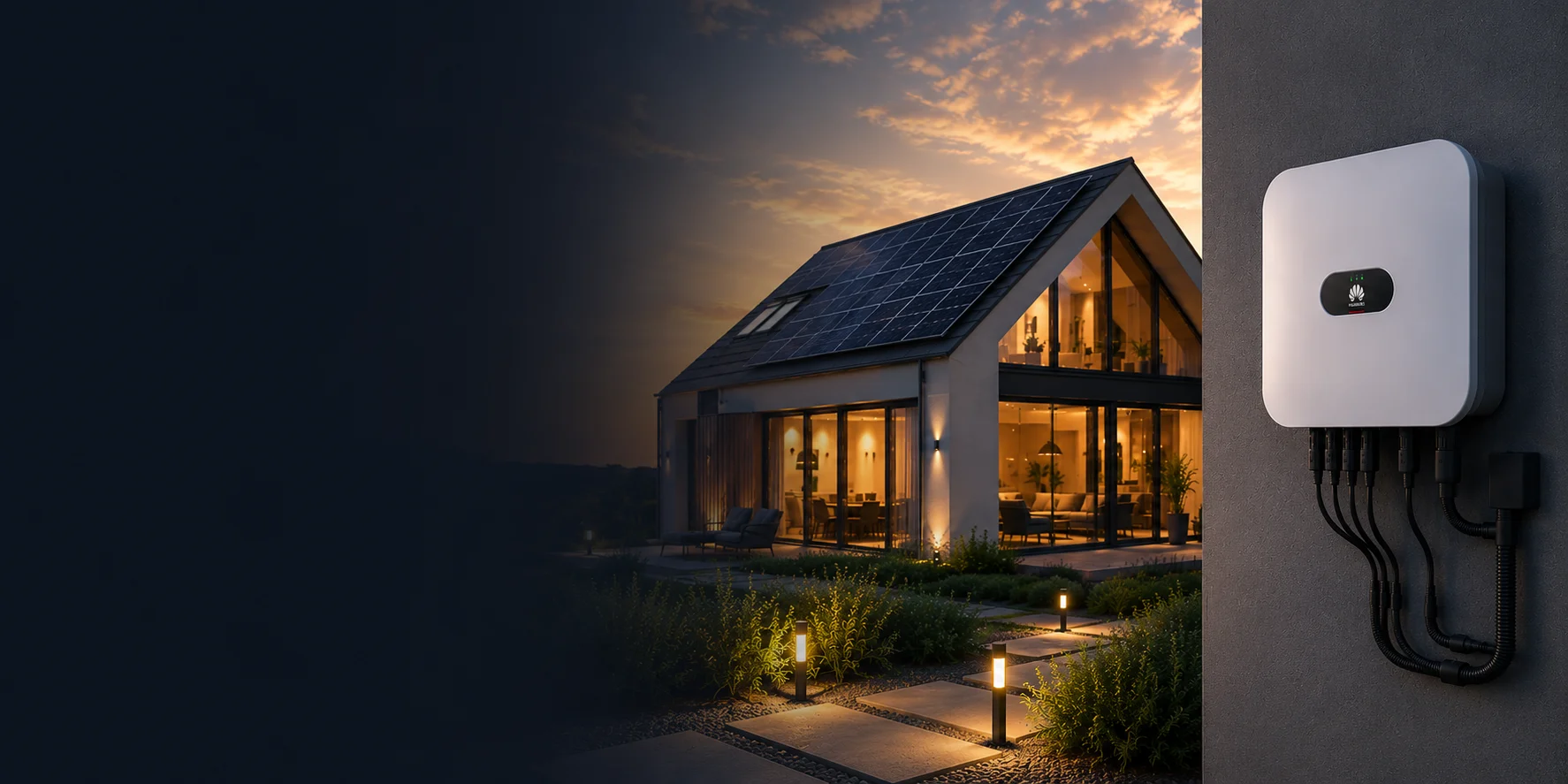
In practice, the inverter is the “brain” of the solar power system.
If we talk about the amount of generated electricity, solar panels play the primary role.
If we talk about system stability, safety, ESS integration, monitoring, and backup functionality, the inverter becomes the key component.
Comparison: Solar Panels vs Inverter
| Parameter | Solar Panels | Inverter |
|---|---|---|
| Electricity Generation | ✔ Main role | Partial |
| Backup Operation During Outages | ✖ No | ✔ Yes |
| Battery Integration | ✖ No | ✔ Yes |
| System Monitoring | ✖ No | ✔ Yes |
| System Safety | Partial | ✔ Main role |
| Fault Protection | ✖ No | ✔ Yes |
| Service Life | 25–30 years | 10–15+ years |
| Replacement Cost | High | Medium |
| Impact on ROI | High | High |
Why a Cheap Inverter Is a Risk
The market still often sees situations where customers choose high-quality solar panels but try to save money on the inverter. At first glance, this may seem logical because panels directly generate electricity. In reality, however, the inverter is responsible for system stability and operational control.
As a result, cheap or low-quality inverter solutions often lead to unstable generation, system errors, unexpected shutdowns, and difficulties with service and monitoring. This becomes especially noticeable in systems with energy storage (ESS), where the inverter controls charging, discharging, and battery operating logic.
In 2026, this issue has become even more important because most customers expect more from a solar power system than simple electricity generation. Backup power, autonomy, and stable operation during grid outages are now essential requirements.
The inverter determines whether a house or business can continue operating during power failures, how correctly the batteries function, and how the entire system reacts to changing loads.
What Matters More for Residential Solar Systems?
For a grid-tied system without batteries, the balance is approximately:
- 60% — solar panels;
- 40% — inverter.
In this case, the primary goal is electricity generation.
For a hybrid solar system with ESS, the balance changes:
- 50% — solar panels;
- 50% — inverter and system logic.
That is because the inverter controls backup operation, switching modes, battery management, and overall system stability.
What Matters More for Businesses?
For commercial and industrial solar power systems, the inverter is often even more important.
Key reasons include:
- high electrical loads;
- complex operating modes;
- peak shaving;
- ESS integration;
- consumption control;
- load management;
- export limitation to the grid;
- generator integration;
- BMS communication.
What Combination Works Best?
Market practice shows that the best results come from balanced solar power systems where all components are properly matched. Combining Tier 1 solar panels, a modern hybrid inverter, professional system design, and quality installation ensures stable and safe operation for many years.
This approach provides predictable energy generation, minimizes technical risks, and delivers real long-term return on investment.
Solar panels generate electricity, but the inverter determines how intelligently, safely, and efficiently the entire system operates.
That is why, when choosing a solar power system, it is important to evaluate not only panel power but also the overall system architecture: inverter capabilities, ESS compatibility, operational logic, and installation quality.
In 2026, a solar power system is no longer just “panels on the roof” — it is a complete energy infrastructure solution.