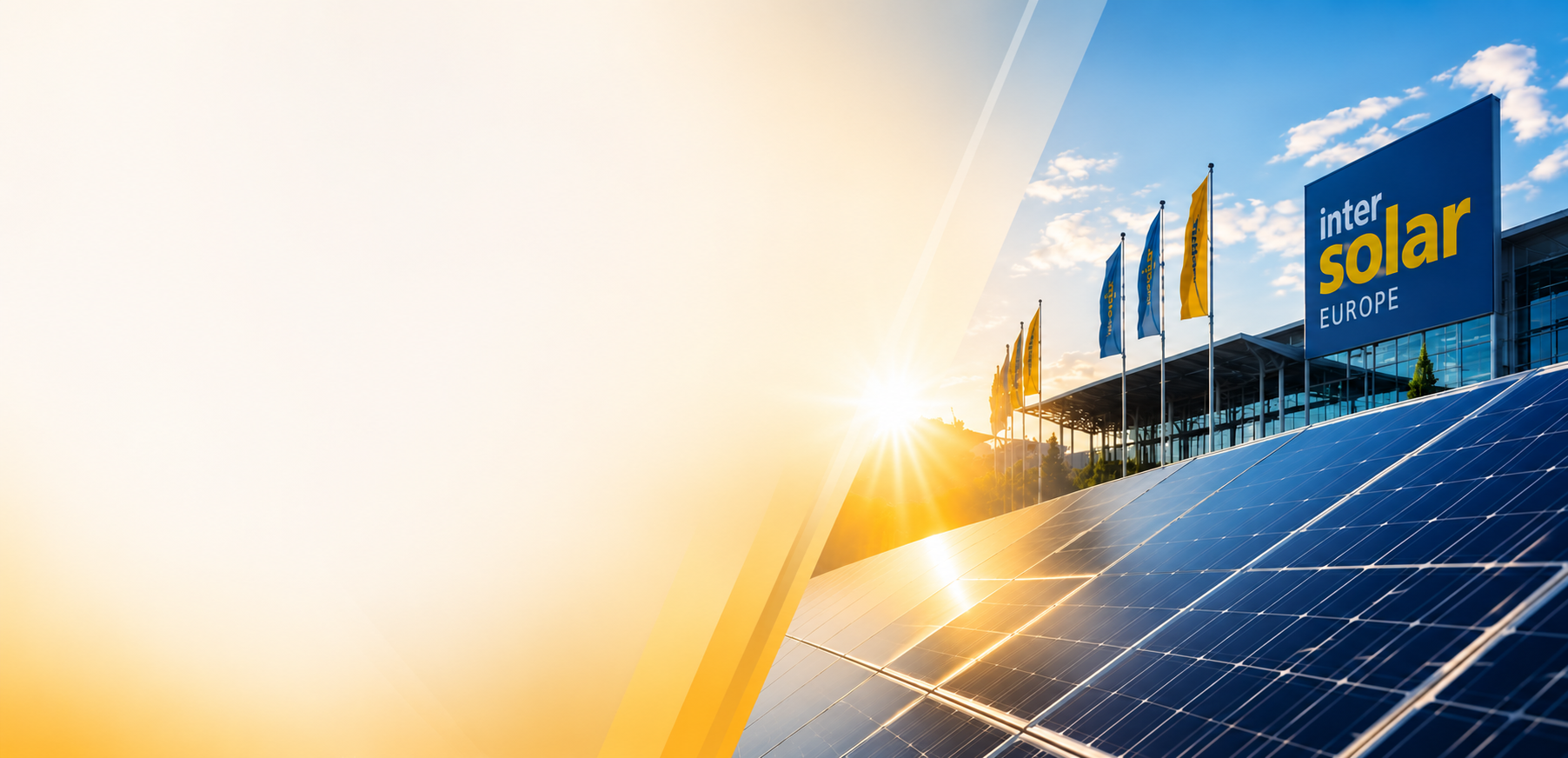
Intersolar Europe is one of the world’s leading exhibitions for the solar energy industry. It is where manufacturers unveil new products, showcase emerging technologies and set the key trends that will shape the industry in the years ahead.
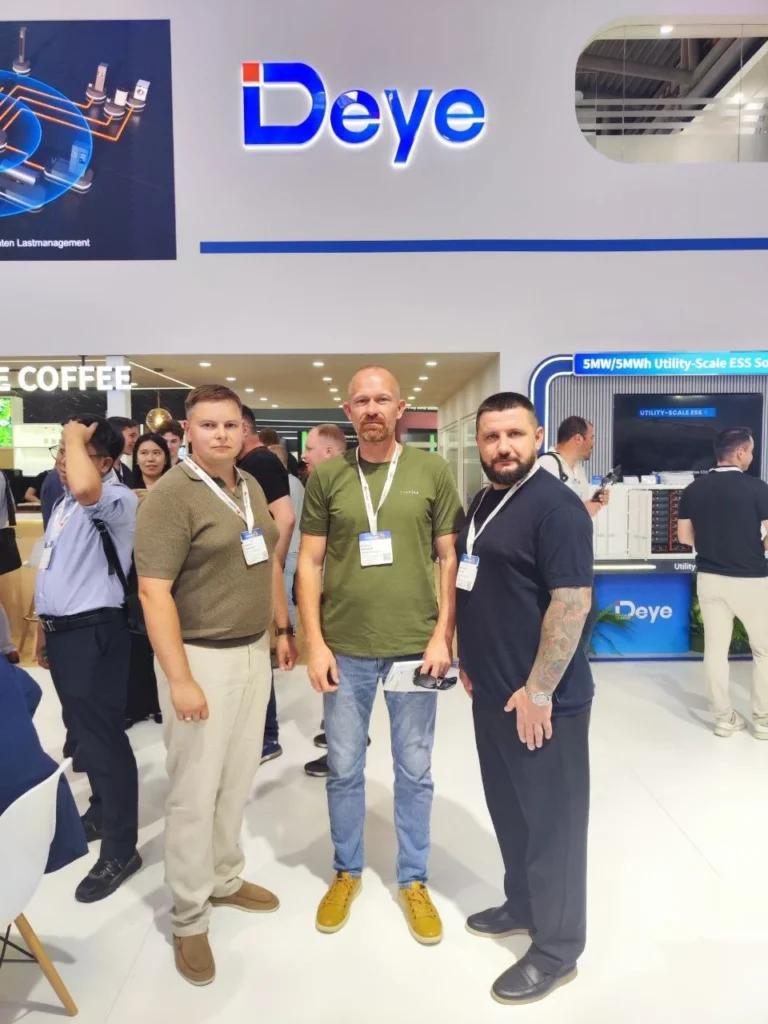
In June, the Modern Energy team visited the exhibition in Munich to explore the latest solutions, meet with manufacturers and discover which technologies are likely to reach the Ukrainian market in the near future.
For our customers, this is an opportunity to better understand how solar energy systems are evolving. For us, it is another step toward selecting technologies and solutions that meet the latest global industry trends.
This article is based on the personal observations of the Modern Energy team during Intersolar Europe 2026, as well as official information provided by the event organizers and equipment manufacturers.
Intersolar Europe - More Than Just an Exhibition
Intersolar Europe is part of The smarter E Europe, Europe’s largest platform for the energy industry, bringing together solar energy, battery storage, e-mobility and smart energy solutions.
According to the organizers, the 2026 edition featured more than 2,800 exhibitors from dozens of countries, with the exhibition covering over 200,000 m². The event brings together manufacturers, engineers, system designers, distributors and installers to discuss the future of the industry and showcase their latest innovations.
This is why many of the technologies presented in Munich today become part of real-world commercial projects only a few months later.
During our meetings with manufacturers, we noticed a clear shift in focus. Rather than presenting individual products, most companies emphasized integrated energy ecosystems that combine generation, energy storage, intelligent control and digital services. This approach was evident across virtually every major exhibition stand.
The Biggest Takeaway from Intersolar Europe 2026: The Industry Has Matured
Just a few years ago, most product launches focused on individual components — more powerful solar modules, new inverters or larger battery systems.
This year, the conversation was different.
Virtually every leading manufacturer emphasized integrated energy ecosystems rather than standalone products. Solar generation is no longer viewed as an isolated technology but as one element of a broader energy management platform.
Today’s key priorities include:
- high-efficiency solar modules;
- advanced inverter technologies;
- battery energy storage systems (BESS);
- intelligent energy management software;
- digital services and remote monitoring;
- seamless integration of all system components.
This trend closely reflects what we are already seeing in the Ukrainian market. Businesses are increasingly looking beyond individual products and instead choosing complete energy solutions designed to operate as a single, integrated system.
Beyond the presentation of new hardware, we observed another important trend. Manufacturers placed significantly greater emphasis on digital platforms, lifecycle services, cybersecurity and software capabilities. This reinforces a key industry shift: today’s solar power system is no longer defined solely by its hardware. Software, connectivity and intelligent energy management have become equally important parts of a modern energy ecosystem.
Energy Storage Is No Longer Optional
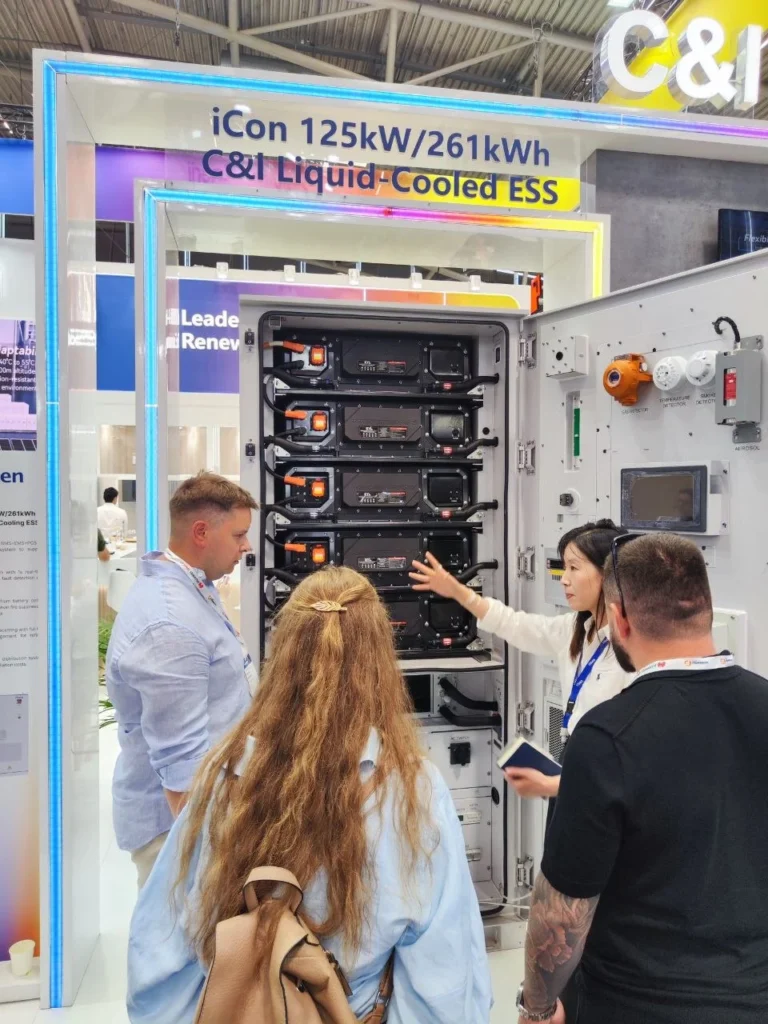
Another trend that stood out across the exhibition was the rapid evolution of Battery Energy Storage Systems (BESS). For EPC companies and commercial customers, this means easier system integration, simplified operation and greater flexibility for future expansion.
Virtually every major manufacturer showcased its own energy storage solutions, ranging from compact commercial systems to large-scale industrial applications.
One of the highlights was the continued development of the Huawei FusionSolar ecosystem, where solar generation, energy storage, intelligent energy management and software operate as a fully integrated platform. This includes the ongoing expansion of the Huawei LUNA2000 series for commercial and industrial energy storage applications.
Manufacturers are now focusing on far more than battery capacity alone. Fire safety, liquid cooling, modular architecture, fast installation and simplified maintenance have become equally important factors in the design of modern BESS solutions.
For Ukrainian businesses, this signals a clear shift: energy storage systems are rapidly becoming a standard component of new commercial solar projects rather than an optional addition.
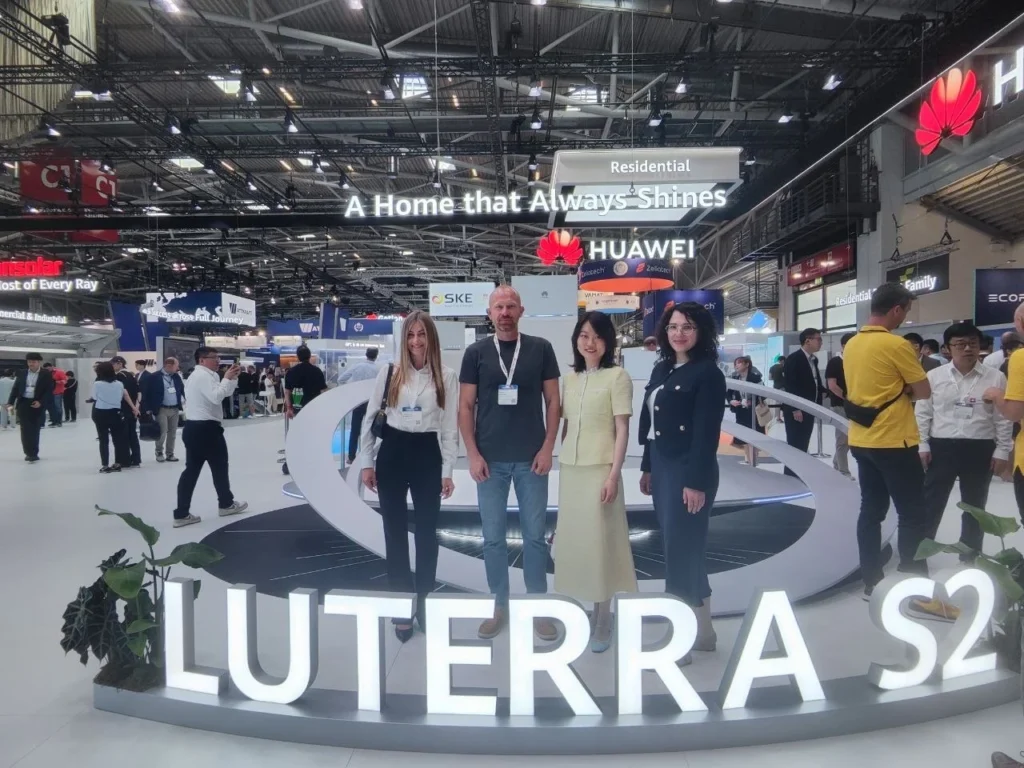
Huawei FusionSolar continues to advance integrated solutions for the solar industry. At Intersolar Europe 2026, the company showcased further developments of its ecosystem, combining solar generation, energy storage, intelligent energy management and digital services for commercial and industrial applications.
Solar Modules: Performance Matters More Than Ever
Across the exhibition, it became clear that competition among PV module manufacturers is shifting beyond simply increasing nameplate power. The focus is increasingly moving toward higher real-world performance, long-term reliability and lower degradation over the system’s lifetime.
LONGi continues to refine its high-efficiency cell technologies, with particular emphasis on module efficiency, performance under partial shading, reduced degradation and long-term energy yield. For investors, these improvements translate into higher long-term energy yield and lower operating costs.
Tongwei Solar (TW Solar) continues to strengthen its position in the global PV market by expanding its portfolio of solutions for commercial and utility-scale projects. The company also continues investing throughout its vertically integrated manufacturing process — from silicon wafers to finished PV modules — ensuring quality control at every stage of production.
At TCL Solar, visitors could explore a range of photovoltaic modules designed for different market segments, with a strong focus on efficiency, reliability and solutions for large commercial and industrial installations.
Another highlight was the AIKO booth, where the company continued demonstrating the advantages of its ABC (All Back Contact) technology. By relocating all electrical contacts to the rear side of the solar cell, ABC modules achieve a larger active surface area, higher conversion efficiency and a cleaner module design. As a result, Back Contact technology remains one of the most discussed directions in next-generation PV module development.
For system owners and investors, the conclusion is straightforward: choosing solar modules today is no longer just about rated power. Long-term energy yield, degradation rates, manufacturer warranties and cell technology have become equally important factors in selecting the right solution.
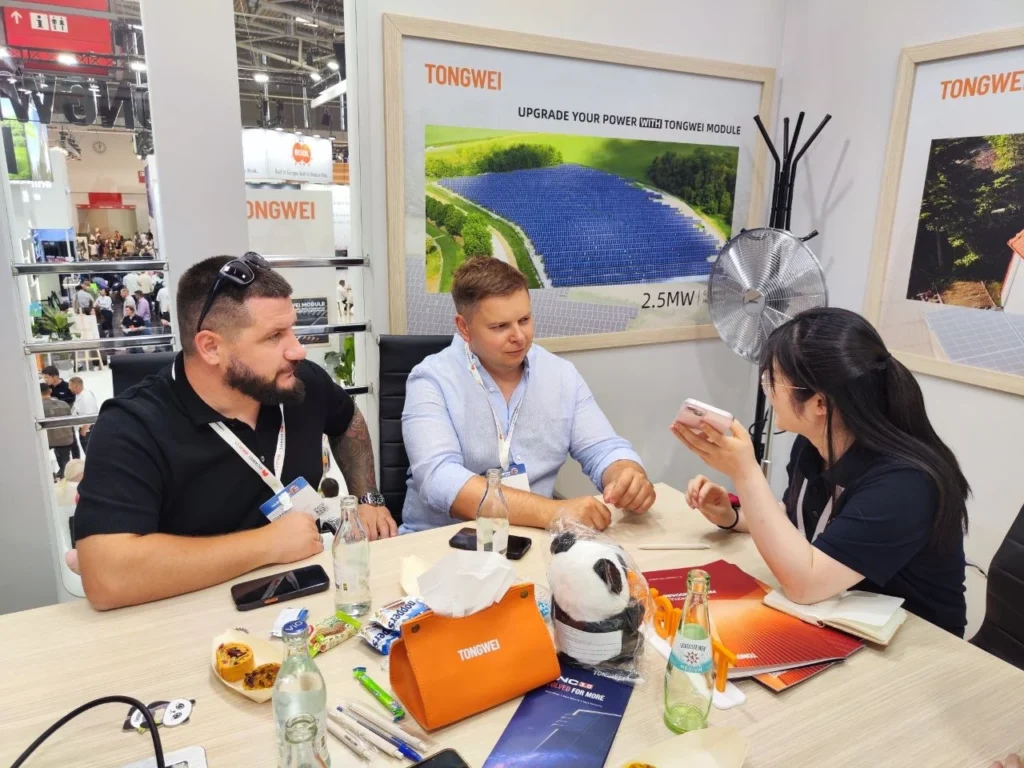
Representatives of Modern Energy met with the Tongwei Solar team to discuss the company’s latest PV technologies and future developments for commercial solar projects.
Digital Services Are Becoming Just as Important as the Hardware
Just a few years ago, software was considered little more than a useful addition to solar equipment.
Today, that has changed dramatically.
Monitoring, remote diagnostics, energy analytics, consumption forecasting and intelligent energy management have become essential components of modern solar energy systems.
As a result, manufacturers are investing heavily in their own digital platforms, while software capabilities are increasingly becoming one of the key factors when selecting solar equipment and energy storage solutions.
What We Took Away from Intersolar Europe 2026
Every international exhibition is more than an opportunity to discover new products. It is also a chance to validate our understanding of where the industry is heading.
This year, we were pleased to see that the direction we have chosen for the development of Modern Energy closely aligns with global market trends. We will continue strengthening our partnerships with manufacturers that invest in advanced technologies, digital platforms and integrated energy solutions.
That is why our focus remains on Huawei, LONGi, Tongwei Solar and Deye — companies that are continuously evolving their product portfolios rather than simply launching new products. Their solutions address a wide range of applications, from residential installations to large commercial and industrial projects
After Intersolar Europe 2026, one thing is clearer than ever: solar energy has evolved far beyond electricity generation alone.
Today’s solar energy systems combine power generation, energy storage, intelligent energy management and digital services into a single, scalable solution that can adapt to the changing needs of businesses.
This is the direction in which the global solar industry is evolving. The technologies showcased at Intersolar Europe 2026 are likely to define the next generation of commercial energy projects — including those we will soon see in Ukraine.