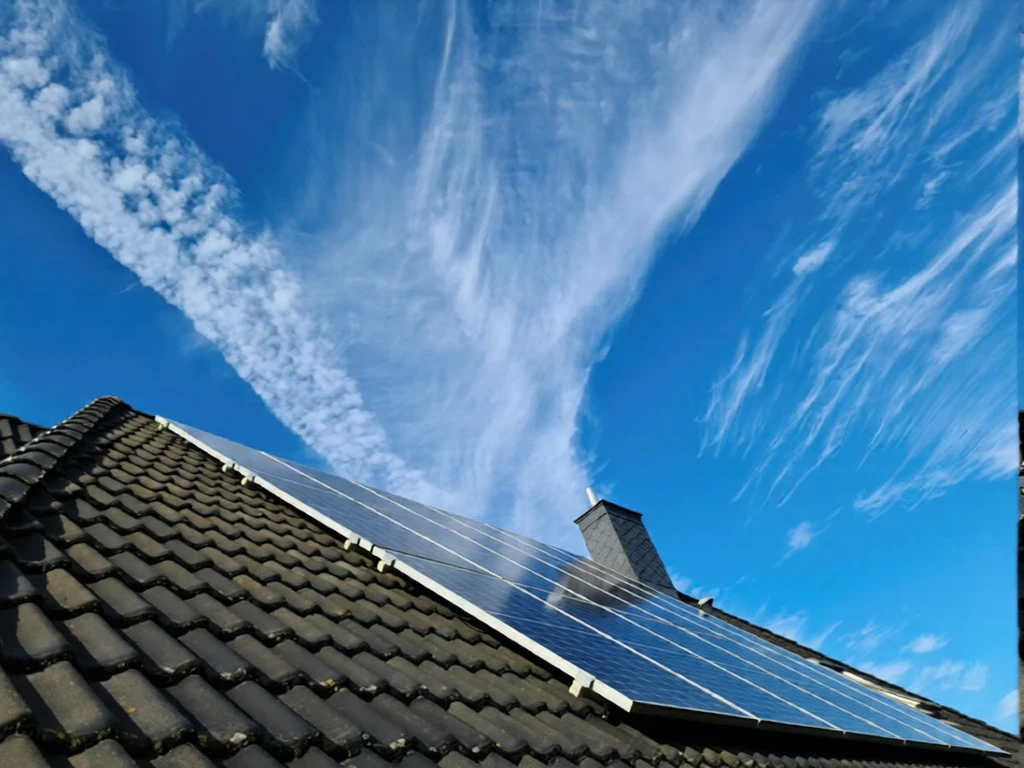
If you are planning to go solar, a key step is to determine if your roof is suitable for installing solar panels.
This aspect is especially important when building a new home. Different roof types and materials interact differently with solar panels. Understanding these factors is critical to ensuring a stable, safe, and productive solar system.
In this article, we’ll take a closer look at which roofs are best suited for solar panel installation in Ukrainian conditions to ensure optimal performance and longevity of your solar power plant.
What type of roof is ideal for solar panels?
There are several popular options that are perfect for solar panel installation in Ukraine. Let’s take a closer look at them:
Installing solar panels on slate or asphalt tile roofs
Slate and asphalt roofs are the most common choice for homes in Ukraine. Slate is characterised by its durability, while asphalt shingles are affordable. Installing solar panels on such roofs is relatively easy.
Installation process:
Technicians use standard fasteners that penetrate the roof.
Holes are drilled to attach the solar panels.
The spaces between the panels and the mounts are sealed with special aprons to prevent water leaks.
Bitumen roofing lasts 12 to 20 years, making it a good option for installing solar panels with a lifespan of several decades.
Installing solar panels on metal roofs
Metal roofs are one of the easiest and best options for installing solar panels. Standing seam metal roofs are especially convenient because they allow panels to be installed without drilling, which greatly reduces installation costs.
Metal roofs have an impressive lifespan of 40 to 125 years or more. Although they are more expensive than other materials and can be noisy during inclement weather, solar panels can partially block out the noise.
Installing solar panels on tile roofs
Tile roofs use special mounts that raise the panels slightly above the roof. It may be necessary to cut or remove individual tiles to install the fixings, which can increase the cost of the work.
The tiles can be made from slate, concrete or clay. Installing solar panels on clay tiles requires special care as they are more fragile.
Tile roofs are popular in the southern regions of Ukraine and are becoming increasingly popular throughout the country. They are durable, have a beautiful appearance and are more waterproof than other types of roofing.
Installing solar panels on tar and gravel roofs
Even if you have a flat tar and gravel roof, it is possible to install solar panels. It is important to use angled brackets to mount the panels at a 30 degree angle for optimal sunlight.
Tar and gravel roofs are economical and last 20 to 25 years. They have reliable seals to prevent leaks and provide a solid foundation for solar panels.
Optimum roof pitch for solar panels
The best roof angle for solar panels is around 30 degrees, which maximises energy production efficiency. However, panels will also work on roofs with other angles.
For optimal performance, add 15 degrees to your latitude in the winter and subtract 15 degrees in the summer.
A roof with a pitch of more than 40 degrees may be too steep for effective solar panel installation.
Solar panels on flat roofs
Installing solar panels on flat roofs is just as easy as on sloped roofs. The installation process is simpler because it is easier to move around on a flat surface.
Flat roofs use weighted mounting systems (ballast systems) that do not require drilling into the roof. Technicians use tilt brackets to install the panels at the optimal tilt angle.
Best direction for solar panels
In our region, the best direction for solar panels is south. If this is not possible, south-east or south-west will do.
How much roof space do I need for solar panels?
The amount of roof space needed depends on the type and manufacturer of the panels, the size of the house and your electricity consumption. On average, one home needs between 37 and 56 square metres of roof space.
Roof strength requirements for solar panels
Solar panels with equipment weigh between 1.5 and 2 kilograms per square decimetre, which is usually acceptable for most roofs. Weight ballast systems on flat roofs may weigh a little more.
Are solar panels harmful to the roof?
Solar panels themselves are not harmful to the roof, but it is important to consider the installation process. Drilling holes for the mounts can lead to water leaks if the work is done poorly.
Professional companies use sealants and special shields to protect the roof from damage and leaks.
The type of roof and professional installation are key factors for efficient and long-lasting operation of your solar power plant in Ukraine. Contact qualified professionals for advice and solar panel installation to ensure your roof is well protected and your solar system performs at its best.